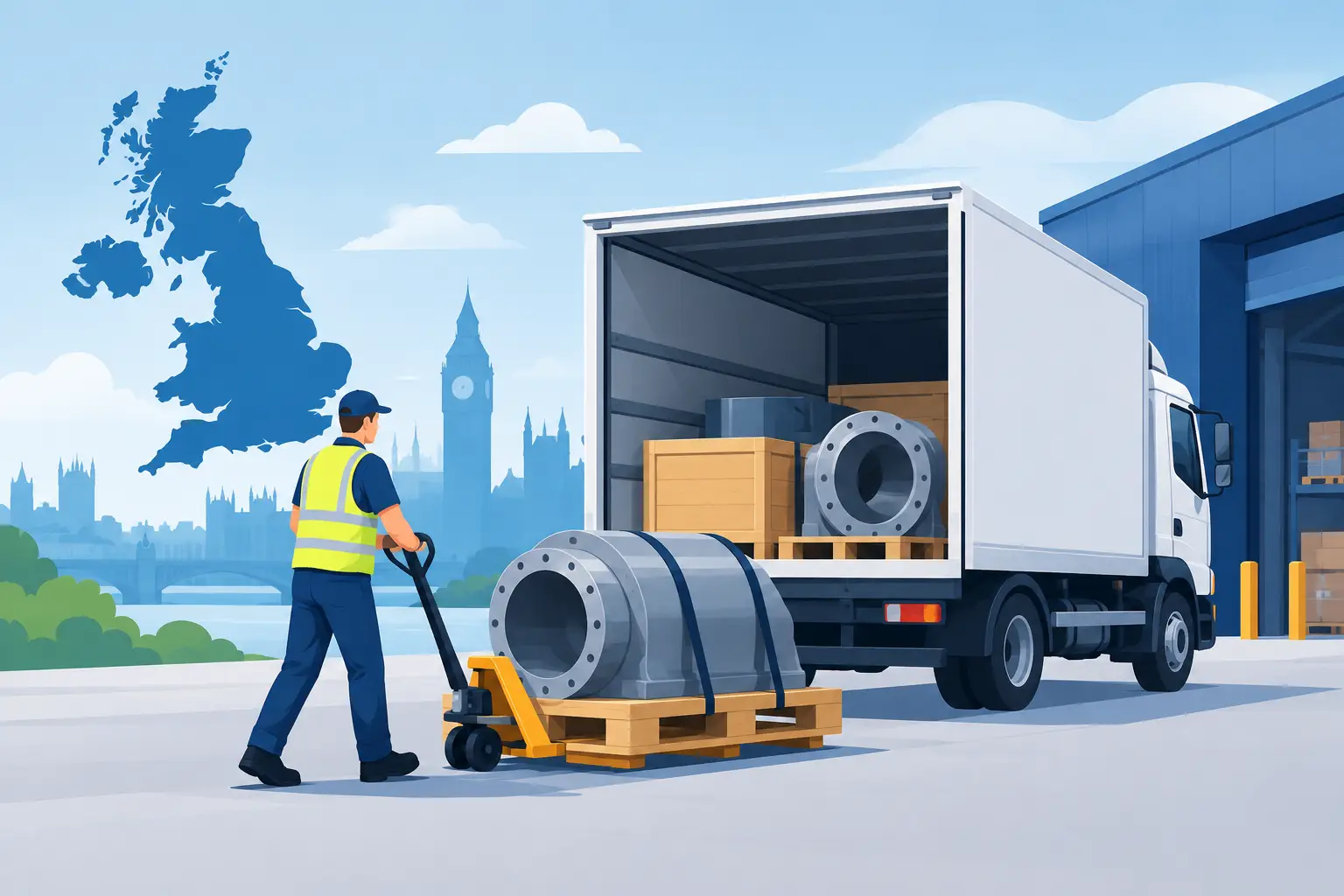
Large Part Delivery Service for UK Businesses
22nd October 2026
A large part delivery service is not simply a standard parcel service with a larger label attached. When a component is too long, heavy, wide or awkward for normal carrier limits, the wrong booking can lead to surcharges, handling delays, damage or a refused collection. For businesses moving machinery parts, automotive components, fabricated steelwork or industrial equipment, the delivery plan needs to reflect the item itself – not just its postcode.
The practical question is not whether a consignment can be sent. It is how to send it safely, at a sensible cost and with someone accountable when plans change. That is where specialist Large Part Service support makes a difference.
When do you need a large part delivery service?
A large part can fall outside standard parcel networks for several reasons. It may be a long-length item such as pipework, aluminium profiles or a vehicle panel. It may be too heavy for manual handling, too wide for automated sorting equipment, or too irregularly shaped to travel securely in a conventional carton.
Some consignments are difficult because of their value or fragility rather than their weight. A moulding, machine guard or replacement assembly may be physically manageable but vulnerable to damage if it is moved through multiple depots. Others need timed collection from a factory, a construction site or a customer location with restricted access.
A specialist service considers those details before the item enters the network. This helps avoid the common mistake of choosing a cheap-looking standard option, only to face extra charges or disruption after collection.
Why standard parcel shipping can become expensive
Parcel services work well when goods are boxed, within published dimensions and easy to handle. Their pricing and operating models depend on predictable loads moving through automated hubs. Oversized freight interrupts that process.
Carriers may apply charges for length, volumetric weight, non-conveyable handling, remote locations or delivery requiring additional equipment. A heavy item may also need a tail-lift vehicle, pallet lorry, forklift access or a specific vehicle type. If these requirements are not declared at the outset, the carrier may be unable to collect or deliver as planned.
There is also a commercial cost to consider. If a replacement part does not reach an engineer, production line or customer on time, the impact can be greater than the freight charge itself. Downtime, missed fitting appointments and delayed orders quickly add pressure to an operations team.
The right service is therefore not always the lowest initial quote. It is the option that gives the shipment a realistic route, appropriate handling and clear expectations from the start.
What a good large part delivery service should assess
Before arranging collection, a freight partner should ask practical questions. Exact dimensions, weight and packaging are essential, but they are only part of the picture. Collection and delivery access can be just as important.
For example, a 2.5-metre component on a pallet may be straightforward for one carrier and unsuitable for another. A delivery to a commercial premises with a forklift is different from a delivery to a residential address, a garage or an unmanned site. International shipments add customs documentation, commodity details and country-specific restrictions to the process.
A proper assessment should cover:
- the length, width, height and actual weight of the goods
- whether the item is palletised, crated, boxed or requires tailored protection
- loading and unloading equipment available at both ends
- collection and delivery constraints, including booking-in times and site access
- the required transit speed, destination and any customs requirements
This information allows the shipment to be matched with a suitable carrier and service level. It also produces a more reliable price than an estimate based on incomplete details.
Packaging large and irregular items properly
Good packaging does not remove every risk, but it makes a major difference. Large parts are more likely to be handled manually or moved by forklift, so exposed edges, corners and protruding sections need protection. Where possible, the item should be secured to a pallet, skid or crate that is strong enough for its full weight.
The aim is to create one stable, liftable unit. Strapping should be tight without damaging the product, and any overhang should be clearly measured and declared. Stretch wrap can keep smaller elements together, but it is not a substitute for structural protection.
For high-value or delicate components, timber crating may be worthwhile. It adds cost and weight, but can be the sensible choice where damage would stop a repair, delay a project or require an expensive replacement. The best option depends on the item, its route and how many handling points it will encounter.
Clear labels also matter. Add the delivery address, contact details, handling instructions and any reference numbers in a visible, weather-resistant format. If an item must remain upright or cannot be stacked, make that clear. Such markings are not a guarantee, but they support safer handling and give the carrier the information it needs.
Choosing service speed without paying for the wrong priority
Urgent does not always mean next-day, and economy does not always mean slow. The sensible choice depends on the value of time to your operation. A replacement gearbox holding up a customer repair may justify a dedicated or priority service. Stock replenishment with a flexible deadline may be better suited to a planned freight option.
For UK deliveries, it may be possible to choose between timed, next-day and economy freight services. For international movements, transit times depend on the destination, customs clearance, local delivery arrangements and the chosen transport mode. Air freight can reduce transit time, while road and sea freight may offer better value for less urgent or heavier consignments.
What matters is having an honest conversation about the deadline. A reliable delivery window is often more useful than a promise that does not account for the actual size, route or paperwork involved.
The benefit of a human point of contact
Self-service booking platforms can work for routine parcels. Difficult freight needs more judgement. A real person can spot when dimensions suggest a carrier restriction, ask about a loading bay before a vehicle is assigned, or intervene when a delivery address creates a problem.
That support is particularly useful when shipments are time-sensitive or moving internationally. If customs paperwork needs clarification, a consignee must be contacted or a collection is missed, businesses need answers rather than a generic tracking update.
Worldwide Shipping Solutions combines access to a broad carrier network with practical advice from people who understand the shipment. Instead of forcing every item into one service, the focus is on selecting a route and carrier that fit the consignment, budget and delivery requirement.
Information to have ready for a faster quote
Accurate information leads to a better quote and fewer surprises. Measure the packed item at its widest, longest and highest points, including pallet overhang, protective framing and any protrusions. Weigh the complete shipment, not only the part inside.
Provide collection and delivery postcodes, the addresses themselves and a contact at each location. Mention whether a forklift, loading dock or tail-lift is needed, and flag restricted access such as narrow roads, timed site entry or residential delivery. For exports, include a clear description of the goods, their value, origin and the relevant commodity information where available.
Photographs can be useful for particularly unusual items. They give a clearer view of the packaging, lifting points and shape than measurements alone. That small amount of preparation helps your freight partner make a sound recommendation first time.
Plan large part deliveries before they become urgent
Oversized and irregular consignments are rarely difficult because they are impossible to move. They become difficult when their handling needs are discovered too late. A little forward planning gives you more carrier choice, better cost control and fewer rushed decisions.
When the next large component needs to leave your site, start with accurate measurements and an honest view of the delivery conditions. Then choose a delivery partner prepared to ask the right questions and stay available until the job is done.